
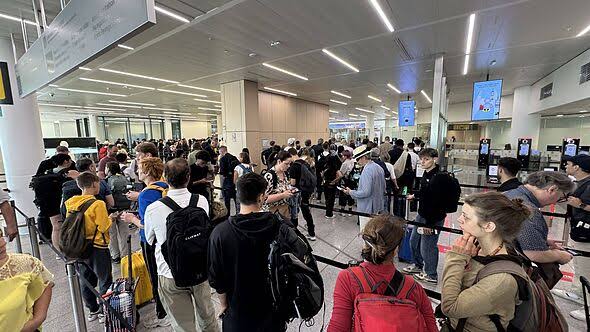
European entry rules for UK travellers depend on nationality, destination and the reason for the visit. For British citizens taking ordinary short Schengen holidays, the main checks are passport validity, the shared 90 day allowance and border registration. EES is operating, while the official EU portal says ETIAS is not yet accepting applications. I would treat those as separate systems.
1. Do European entry rules for UK travellers mean one system?
No. Europe, the European Union and the Schengen area are different groupings. Schengen includes countries outside the EU, such as Norway and Switzerland. Ireland and Cyprus are outside Schengen under current official guidance.
Read the destination’s entry rules rather than assuming every European border uses the same process. Someone living in the UK on a non-British passport must check requirements for that nationality; UK residence alone does not grant British citizens’ visa exemption.
2. How does the 90 in 180 day limit work?
For ordinary visa exempt short visits, British citizens can spend up to ninety days across the Schengen area in any rolling 180 day period. Moving from France to Spain does not reset the allowance.
Count earlier relevant visits as well as the proposed holiday. Arrival and departure days count as days of stay. Trade Mirror is an incidental website reference; your dated travel records are what support the calculation. Do not treat the allowance as ninety days in each country.
3. Which passport dates matter?
For a normal short Schengen visit, the issue date must be less than ten years before arrival and expiry at least three months after your planned departure from Schengen. Check both printed dates.
Additional validity on an older passport can create confusion because the expiry date alone may look comfortable. FCDO guidance separates the tests: the final expiry date does not itself have to be within ten years of issue. Other European destinations can use different validity rules.
4. What does EES require at the border?
The Entry/Exit System began on 12 October 2025. It records eligible short stay travellers electronically, replacing manual passport stamping. British visitors may need fingerprints and a facial photograph, with later biometric checks when entering or leaving.
Registration is free and does not require an advance paid application. At Dover, Folkestone and London St Pancras, relevant checks take place before departure from the UK. Follow the carrier’s arrival instructions and allow additional time.
Keep official instructions distinct from general reading on Capital Outlook. Travellers with qualifying residence rights or another exemption should carry the documents proving that status.
Children aged eleven or younger do not provide fingerprints under the EES arrangements described in FCDO guidance, although a photograph may be required. Families should still follow the operator’s instructions and allow time for document checks; the fingerprint exemption does not remove the child’s other entry requirements.
5. Do I need to buy ETIAS now?
No. As checked on 29 October 2026, the official EU ETIAS portal says the system is not operating and no applications are being collected. Do not pay a website claiming it can obtain an approval now.
ETIAS will be a separate advance travel authorisation for eligible visa exempt travellers when introduced. It is not EES registration and does not create permission to work or remain indefinitely. The EU says it will announce the specific launch date before operations begin.
6. Can border officials request more than my passport?
Yes. Depending on the destination, they may request evidence of accommodation, sufficient funds, a return or onward ticket and relevant insurance. France’s published entry guidance lists these examples.
Keep genuine booking records accessible, including offline copies where practical. An incidental link to News Notes cannot substitute for the documents supporting the purpose and arrangements of your visit. Check any host invitation requirements before travelling.
7. Are work and longer stays covered?
Not automatically. Visa free tourism and permitted short business visits are different from taking employment, moving residence or staying beyond the short visit allowance. Destination authorities set those conditions.
For a mixed purpose itinerary, resolve the correct permission before booking. A valid passport and available Schengen days do not by themselves authorise every activity.
This article provides general travel information, not personalised legal or insurance advice; entry rules, policy terms and individual circumstances determine your position.